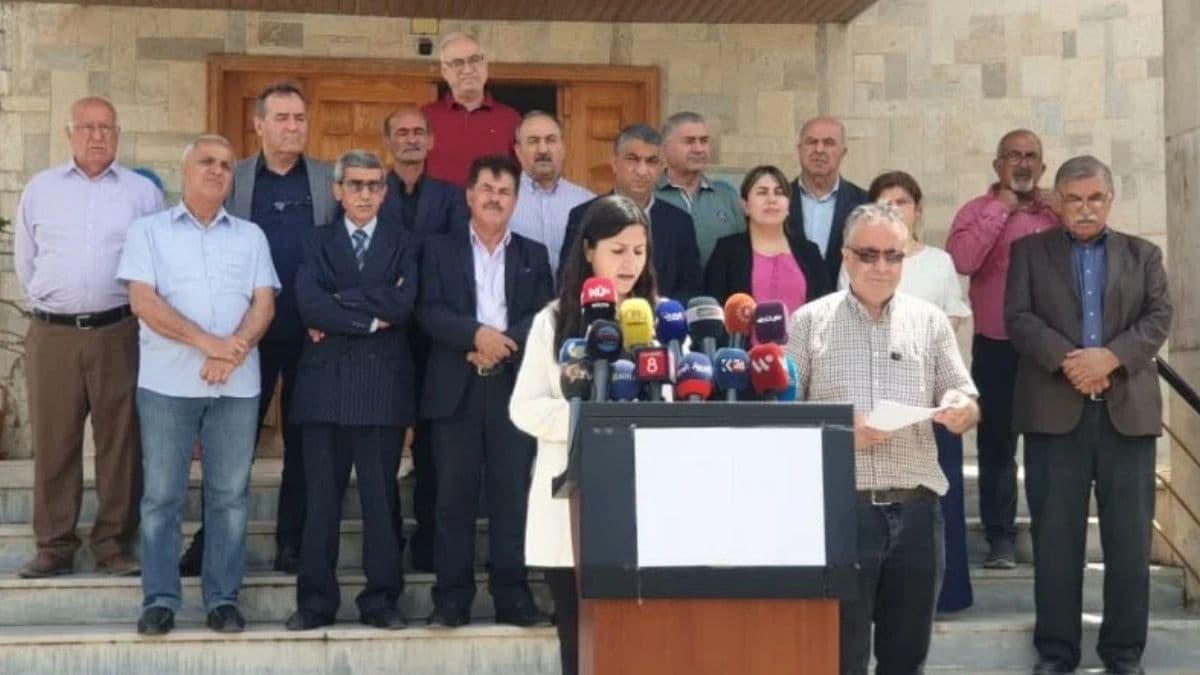
Kurdish Parties Reject Four-Seat Allocation, Demand at Least 40 Parliamentary Seats
Kurdish parties reject seat distribution and call it political exclusion Twenty-four Kurdish parties and blocs, including the Democratic Union Party, gathered in Qamishli on May 19 to denounce the me...
Kurdish parties reject seat distribution and call it political exclusion
Twenty-four Kurdish parties and blocs, including the Democratic Union Party, gathered in Qamishli on May 19 to denounce the mechanism for assigning Kurdish seats in the Syrian People’s Assembly. They said allocating only four seats out of 210 amounts to a "political execution" of Kurdish rights, argued the figure ignores Kurdish demographic weight (which they say is at least 20% of Syria’s population), and denounced what they described as appointed representatives—citing the selection of a Ras al-Ain deputy from the al-Ghamr Arab community and the inclusion of names from outside Hasakah in electoral bodies. The signatories rejected the current mechanism in full, demanded no fewer than 40 seats for Kurds from Rojavayê Kurdistan to reflect their population share, warned that accepting four seats would set a dangerous precedent for future representation, and pledged to continue a peaceful popular struggle with Syrian democratic forces for genuine partnership and a constitution that recognizes Kurdish rights.
Electoral authorities respond; context of shifting control
The Higher Committee for People’s Assembly Elections published preliminary lists for electoral bodies in Hasakah, Qamishli, al-Malikiyah and Ain al-Arab (Kobani), with membership counts of 172, 251, 104 and 128 respectively. Nawar Najmeh, the committee spokesperson, told state media the process is "far from the principle of quotas," saying representation will be determined by competencies and that the committee’s role ends with forming electoral bodies while fair ballot boxes will decide results. The contested vote follows recent territorial and political shifts in northeastern Syria after Syrian army advances in January and a subsequent agreement to integrate local institutions into Syrian ministries—a process begun in February that still faces obstacles in some areas. as reported by Enab Baladi