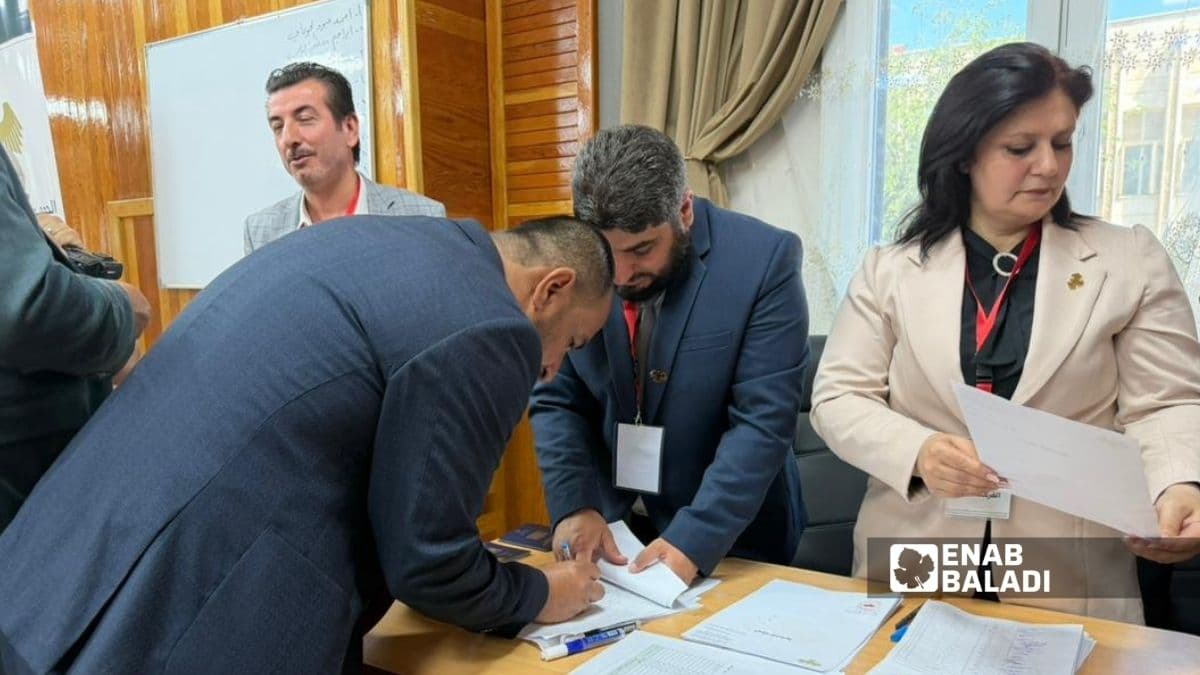
Voting opens in Hasakah, Qamishli and Kobani to complete delayed elections
Voting for Syria’s People’s Assembly began on Sunday morning, 24 May, in Hasakah governorate — covering Hasakah city, Qamishli and Ayn al-Arab (Kobani) — as authorities completed delayed stag...
Voting for Syria’s People’s Assembly began on Sunday morning, 24 May, in Hasakah governorate — covering Hasakah city, Qamishli and Ayn al-Arab (Kobani) — as authorities completed delayed stages of the electoral process in northeastern Syria. Polling centers opened at 08:00 and were scheduled to run until noon, with a possible one-hour extension; vote counting was to begin immediately after closure and preliminary results announced at designated centers. The Higher Committee for the People’s Assembly Elections said supervisory teams inspected centers beforehand to ensure readiness, prepare secret ballot rooms, secure logistical needs and organize attendance by local and foreign media. Polling sites named on 22 May include the Hasakah Governorate Administration meeting hall, Qamishli’s old cultural center next to the Engineers Syndicate, and the cultural center in Ayn al-Arab.
Background
The Higher Committee published final candidate lists in mid- to late-May: 22 candidates across Hasakah governorate districts (13 in Hasakah, 7 in Qamishli, 2 in al-Malikiyah) and 12 candidates for Ayn al-Arab, after an additional ten names were added to Qamishli’s list shortly before approval. The delayed voting follows months of military and territorial developments in northeastern Syria — since mid-January Syrian army forces advanced into parts of eastern and southern Hasakah countryside while the Syrian Democratic Forces continued to control main cities — and a January agreement between the government and the SDF that opened the way for gradual institutional reintegration and reactivation of some official departments. The vote is being carried out under the temporary electoral system and executive instructions adopted in 2025 and the committee said its procedures were prepared in line with constitutional provisions and relevant decrees, as reported by Enab Baladi