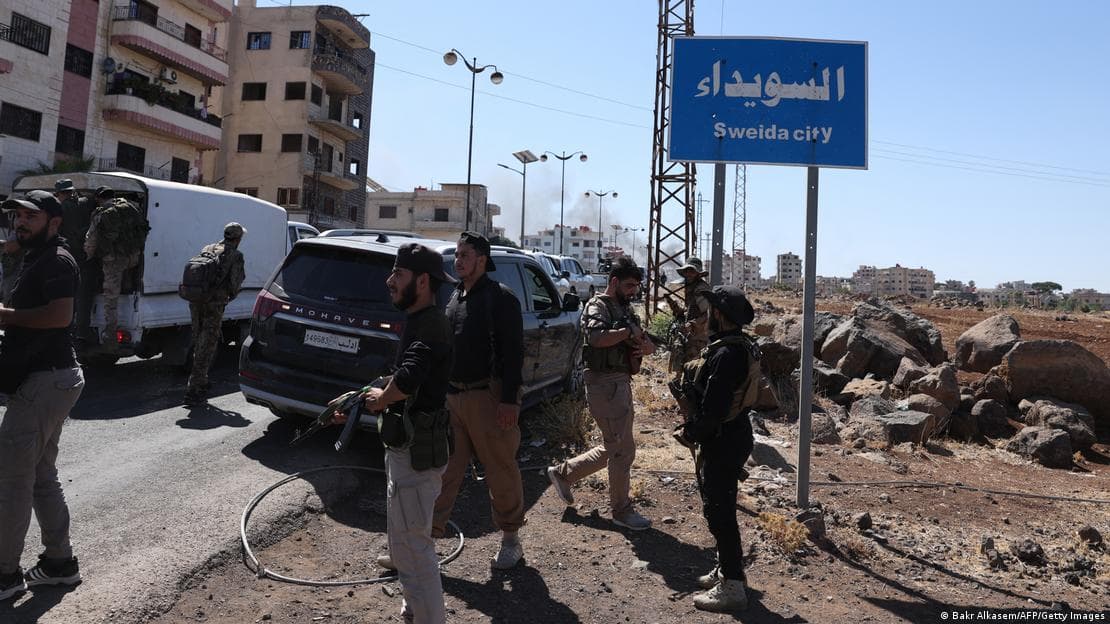
Year after Suweida massacres: truth erased, displacement entrenched
Suweida one year on The first anniversary of the July 2025 Suweida massacres shows that violence has become embedded in paperwork, population shifts and local power rather than being resolved. Surviv...
Suweida one year on
The first anniversary of the July 2025 Suweida massacres shows that violence has become embedded in paperwork, population shifts and local power rather than being resolved. Survivors report official pressure to record executions and sectarian killings as “natural causes” or “stray bullets” to obtain death certificates, pensions and travel documents; a mass burial near al-Raha contains at least 213 bodies, many unmarked, while forensic and investigative capacity is lacking. Between 155,000 and 190,000 people were displaced, water and basic services remain degraded, humanitarian aid has fallen and dozens of villages are inaccessible — conditions that make return and restitution increasingly unlikely.
After a partial government withdrawal, the National Guard under Sheikh Hikmat al-Hijri filled the security vacuum, presenting itself as communal defence but being accused of intimidation, arbitrary detention and curbs on free expression. Calls for autonomy or a separate “Bashan State” have gained traction amid reports of foreign backing, yet such projects lack consensus and risk external dependency and internal exclusion. Official accountability has been limited to prosecutions of lower-ranking soldiers, the Amman Roadmap’s wider stabilisation promises are largely unrealised, and families’ concrete demands — accurate death certificates, identified graves, access to homes, compensation and impartial investigations — remain unmet, leaving Suweida trapped in a frozen crisis without truth or justice as reported by The Syrian Observer